
One application to CIPO, grouped by Nice class, protects your mark in Canada for 10 years. This guide, checked against the Trademarks Act and Regulations current to September 2026, gives CIPO’s official timelines (14 months to a first action, 34.5 months on average to registration), every step with its section, whether a foreign owner needs an agent or a Canadian address, the Madrid route, and how a Canadian registration opens a .ca domain.
Can You Trademark Your Voice? Sound Marks After Meloni’s EU Filing
Written by Emily Brooks ·
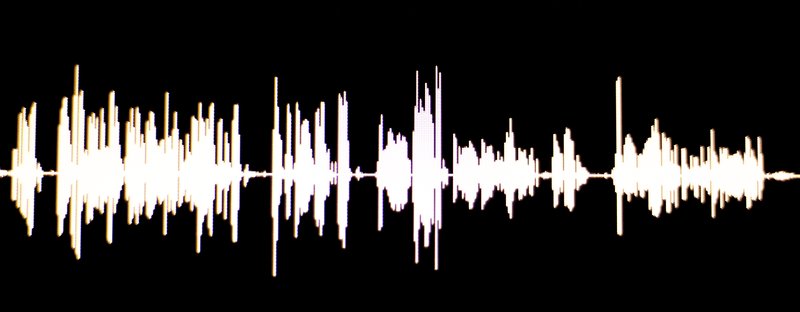
Yes, but only in a narrow sense. In the EU and the US you can register a recording of your voice as a sound mark, as long as the recording works as a brand for specific goods or services and is distinctive enough for the examiner. What you get is protection for that sound in the course of trade, not ownership of your voice, and it does not stop a deepfake that is not used to sell anything. Italy’s Prime Minister Giorgia Meloni is testing this right now with EU application 019431219, a 4.8-second recording of her saying “Io sono Giorgia Meloni”. For most people and businesses, the protection that actually matters starts with their name or signature phrase as a word mark, for example an EU trademark registration covering all 27 member states.
Checked on 25 October 2026 against the EUIPO register entry for application 019431219, the EU Trade Mark Regulation and its Implementing Regulation, the EUIPO Examination Guidelines, the USPTO’s Trademark Manual of Examining Procedure and federal rules, and the other laws named below. The Meloni file is still moving; each fact below names its source.
What Meloni actually filed
The press called it “trademarking her voice”. The register entry is more precise. This is what the EUIPO’s own record of the application showed on 25 October 2026:
| Field | What the EUIPO register shows |
|---|---|
| Application number | 019431219 |
| Mark type | Sound (an individual EU trade mark) |
| The sign | An MP3 file of about 4.8 seconds, recorded as “Io sono Giorgia Meloni” (“I am Giorgia Meloni”) |
| Applicant | Giorgia Meloni, as a natural person, through an Italian IP firm |
| Filing date | 5 October 2026, filed through the EUIPO’s Fast Track |
| Classes | 9, 41 and 45: 51 goods and services in total |
| Examples of what it covers | Class 9: downloadable media content, multimedia files and electronic publications. Class 41: cultural and entertainment events, seminars, conferences, publishing of books, magazines and newspapers. Class 45: “Organization of political meetings; Legal research in the field of public policy” |
| Status | “Application under examination” |
| Published for opposition? | No. No publication date and no opposition period yet |
Two details matter. First, the sign is a short recording of her name, not “her voice” in general: the protection, if granted, attaches to that recording. Second, the list of services is commercial in form. A trademark only exists in relation to goods and services, so even a politician’s application has to name things like publications, events and, here, the organization of political meetings.
What the EUIPO file shows since filing
News coverage has described the application as “under examination” since early October. The file history in the register adds a few dated steps that we have not seen reported:
| Date (2026) | Step recorded in the EUIPO file |
|---|---|
| 5 October | Application filed, fee paid, filing receipt issued, goods and services classification checked. The automatic formalities check on filing day was marked “not OK” |
| 13 October | Formalities examination completed (“OK”) |
| 14 October | An “ex parte suspension” entered in the file |
| 22 October | File information modified |
| 25 October (our check) | Status still “Application under examination”; filed through Fast Track, but the Fast Track indicator now reads “false” |
What this means, and what it does not. Examination runs between the EUIPO and the applicant alone (“ex parte”); third parties only come in after publication. If the examiner finds a deficiency or an objection, the applicant is notified and gets 2 months to fix it or reply, according to the EUIPO’s examination guidelines. The EUIPO also explains that an application can meet the Fast Track conditions when filed and lose them later, for example if the mark is found not to be sufficiently distinctive, and that the applicant is then informed in writing. The register does not publish the letters in this file and the EUIPO does not document what its “ex parte suspension” entry means, so the reason for the suspension and for the change in Fast Track status is not public. Neither is a refusal. What the record does show is that the application is no longer on the fastest route to publication.
Can a recorded voice pass examination?
It can, and there is a precedent in the EUIPO’s own guidelines. Among its examples of acceptable sound marks, the EUIPO lists EUTM No 17 700 361, a human voice clearly pronouncing the word “barça”. The register shows it belongs to FC Barcelona, was filed on 17 January 2018 and registered on 16 May 2018 for goods and services in eight classes. The test is the same as for any other mark: would the average consumer perceive the sound as memorable and as a sign of where the goods or services come from? The guidelines say a sound needs “a certain resonance” to pass, and that a sound with words or lyrics is judged as a whole, so a spoken phrase is examined together with the words it contains.
The EUIPO lists the kinds of sound marks that are unlikely to be accepted without evidence of acquired distinctiveness:
- very simple pieces of music of only one or two notes;
- sounds in the common domain, such as a national anthem or Für Elise;
- sounds too long to work as an indication of origin;
- sounds typically linked to the goods or services, such as a doorbell for door bells or the sound of opening a can for drinks.
The USPTO applies a similar line. Its examination manual says a sound can be registered when it is “arbitrary, unique or distinctive”, while sounds that imitate “commonplace” sounds, or that goods make in their normal operation, need proof of acquired distinctiveness first (TMEP §1202.15).
For a person’s voice, the words carry much of the weight. Because a recording with words is judged as a whole, a recording of someone saying their own name is assessed largely like the name it contains. In the EU a personal name can be a trade mark (Article 4 EUTMR names “personal names” expressly), so a name is not a problem in itself; what the examiner looks for is whether the whole recording can work as a sign of origin for the goods and services listed.
How a sound mark is filed in the EU and the US
| Step | European Union (EUIPO) | United States (USPTO) |
|---|---|---|
| Legal basis | Sounds are listed as signs that can be EU trade marks (Article 4, Regulation 2017/1001) | Sound marks recognised in examination practice (TMEP §1202.15) |
| How the mark is represented | An audio file or accurate musical notation (Implementing Regulation 2018/626, Article 3(3)(g)) | No drawing; a detailed written description of the sound (37 CFR §2.52(e)), plus an audio reproduction |
| Audio file | MP3 only, maximum 2 MB, no streaming or looping; e-filing only | .wav, .wmv, .wma, .mp3, .mpg or .avi, up to 5 MB (TMEP §807.09) |
| Written description | Not possible: the recording alone defines the mark | Required |
| Proof of use to register | Not required to register; the mark must be put to genuine use within 5 years of registration (Article 18 EUTMR) | Required before registration (a specimen showing the sound used for the goods or services) |
| Opposition window | 3 months from publication (Article 46 EUTMR) | 30 days from publication, extendable (37 CFR §2.101(c), §2.102) |
| Duration | 10 years from the filing date, renewable (Article 52 EUTMR) | 10 years from registration, renewable, with use declarations (37 CFR §2.181) |
Most registered sound marks are jingles and signature sounds, but spoken phrases are on the register too. A few that can be checked in the official records:
| Sound mark | Office and number | What the record says |
|---|---|---|
| NBC chimes | USPTO Reg. No. 916,522 (1971) | Three chime-like notes, G, E, C, for television broadcasting |
| MGM lion | USPTO Reg. No. 1,395,550 (1986, renewed) | “The mark comprises a lion roaring”, for films and entertainment services |
| “Alright, alright, alright” | USPTO Reg. Nos. 7,995,951 (21 October 2025) and 8,070,191 (16 December 2025) | “A man saying ‘ALRIGHT ALRIGHT ALRIGHT’”, with the pitch of each syllable described. Owned by J.K. Livin Brands, Inc., which also holds a motion mark (Reg. No. 7,893,248) that the USPTO describes as showing “the actor Matthew McConaughey”. Covers entertainment services and downloadable recordings. Both were filed on 21 December 2023 as intent-to-use applications, so registration took about 22 to 24 months |
| “Barça” spoken | EUIPO, EUTM No 17 700 361 | A human voice clearly pronouncing the word. Owned by FC Barcelona, registered 16 May 2018, four months after filing; cited by the EUIPO as an acceptable sound mark |
Taylor Swift filed two US sound mark applications in April 2026, recordings that begin “Hey, it’s Taylor”, according to AFP; they are applications, not registrations. Notice what the registered examples share: each protects one short, fixed recording used to identify a product or service. None of them protects a voice as such.
What a voice trademark does not stop
This is where most coverage overpromises. A registered EU trade mark lets its owner stop others from using an identical or similar sign “in the course of trade, in relation to goods or services”, and for similar signs only where there is a likelihood of confusion (Article 9(2) EUTMR). In practice that leaves out:
- Non-commercial deepfakes. A fake clip shared to mislead or mock, with nothing sold, is usually not “use in the course of trade”.
- Your voice saying other words. The registration covers the recorded sign and signs similar to it. It does not give a monopoly over a timbre or an accent.
- Uses outside the registered goods and services, unless the mark has a reputation in the EU (Article 9(2)(c) EUTMR).
- Honest descriptive and referential uses, which Article 14 EUTMR leaves free.
- Anything before registration. Rights against third parties start when the registration is published; for acts after the application is published, the owner can later claim reasonable compensation (Article 11 EUTMR). An application still under examination and unpublished gives neither.
So a sound mark is useful for what trademarks always do: stopping someone from selling content, products or events under your recognisable audio signature. It is a weak tool against a political deepfake.
The other laws that protect a voice
Because a trademark only works in trade, the main legal protection for a voice usually comes from elsewhere. As of October 2026:
| Law | Where | What it does for a voice | Status |
|---|---|---|---|
| Right of publicity (state law) | United States | Protects the commercial use of a person’s identity. Tennessee’s ELVIS Act gives every individual “a property right in the use of that individual’s name, photograph, voice, or likeness”, defines voice to include “a simulation of the voice”, and adds liability for tools whose primary purpose is producing a specific person’s voice | Tennessee law in force since 1 July 2024 (Public Chapter 588); rules differ by state |
| NO FAKES Act | United States (federal) | Proposed federal right against unauthorized digital replicas of a voice or likeness | Bills S.1367 and H.R.2794 referred to the Judiciary committees on 9 April 2025; no later action on congress.gov on 25 October 2026 |
| AI Act, Article 50(4) | European Union | Deployers of AI that generates or manipulates audio “constituting a deep fake” must disclose that it was artificially generated. A transparency duty, not a right to stop the content | Applies from 2 August 2026. The July 2026 Digital Omnibus (Regulation 2026/1744) gave a grace period to 2 December 2026 only for the providers’ marking duty in Article 50(2), not for this one |
| Publicity rights (case law) | Japan | The Tokyo District Court ruled for voice actor Kenjiro Tsuda against AI-generated videos imitating his voice, finding an infringement of publicity rights; it did not order deletion because the account had already been closed | Judgment of 30 September 2026, as reported by AP (the judgment was not available on the court’s website when we checked) |
| Sound mark | EU, US and many other countries | Stops others from using the same or a confusingly similar sound for conflicting goods or services | Only after registration, and only in trade |
In other words, a trademark and these laws do different jobs. Publicity and personality rights cover the use of who you are; AI transparency rules cover how synthetic audio is labelled; a trademark covers a sign used as a brand. Someone worried about deepfakes of their voice usually needs the first two more than the third.
What to register first if you are a creator or a brand
If your name or voice is part of what you sell, the order that gives the most protection for the effort is:
- Register the name you trade under as a word mark, in the classes you actually use (for example 41 for entertainment services or 9 for downloadable content). A word mark covers the name however it is spoken, written or shown, which a recording does not. Our guide on whether you can trademark your name explains the rules for personal and stage names.
- Add your catchphrase or show title if it identifies your goods or services.
- Consider a sound mark only for a short, distinctive audio signature you actually use as a brand: an intro, a jingle or a spoken tagline that is part of your content or products.
- File where you sell. An EU trade mark covers the 27 member states with one application; the US needs its own federal application, with proof of use before registration.
- Keep evidence of use (dated recordings, published episodes, ads). It matters for distinctiveness, for US registration and for any dispute.
Protect.TM files trademark applications through licensed local attorneys. You can register your trademark in the European Union or register your trademark in the United States, starting with a study of whether your name or phrase is likely to be accepted.
Frequently asked questions
Can you trademark your voice?
You can register a specific recording of your voice as a sound mark in the EU or the US if it works as a brand for goods or services and is distinctive. You cannot register your voice in the abstract, and the mark only works against commercial use.
Has the EUIPO accepted Meloni’s voice trademark?
No. On 25 October 2026 application 019431219 was still “under examination”, with an ex parte suspension entered on 14 October and no publication. If it is published, third parties will have 3 months to oppose.
Has anyone registered a spoken word as a sound mark in the EU?
Yes. EUTM No 17 700 361, a human voice saying “barça”, was registered to FC Barcelona in May 2018, and the EUIPO’s guidelines cite it as an acceptable sound mark.
Does a sound trademark stop AI voice clones?
Only when the clone is used in trade for goods or services that conflict with the registration. Deepfakes used to mislead, mock or campaign usually fall under other laws instead: publicity and personality rights, and AI transparency rules.
What file format does a sound mark need?
At the EUIPO, an MP3 of no more than 2 MB (or musical notation). At the USPTO, an audio file such as .mp3 or .wav of up to 5 MB, plus a written description of the sound.